
Interspecies Antibody Conversion Platform
Service Platform Director: Professor Chih-Hung Chuang
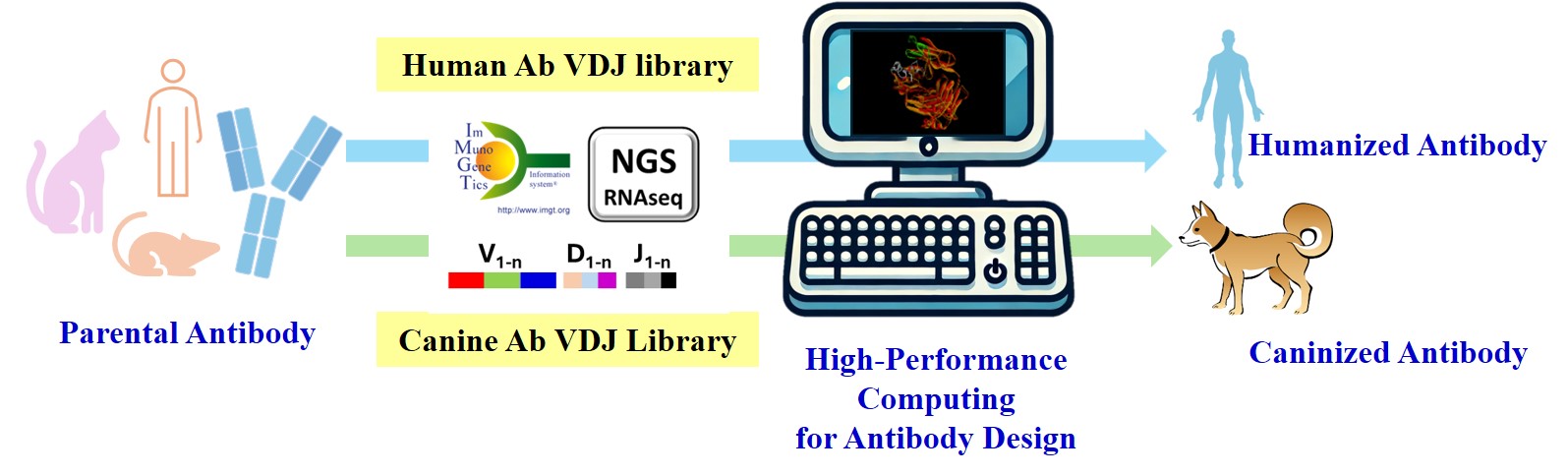
The development of antibody therapeutics critically depends on the availability of antibodies with high binding affinity and low immunogenicity for clinical use. Although various tools currently exist for developing low-immunogenicity antibodies—such as phage display systems and fully humanized mouse models—their widespread adoption by pharmaceutical companies and laboratories is often hindered by lengthy development timelines and prohibitive patent licensing fees. This limitation is even more pronounced in feline and canine medicine, where the lack of appropriate tools has stalled drug development, leaving a critical gap in clinical oncology antibodies for animals.
To address these challenges and establish a high-performance system, our center is upgrading our established computer-aided antibody structure platform. By integrating state-of-the-art AI technologies (ESMFold and ESM-2) with comprehensive human, feline, and canine antibody sequence databases, we have developed the Interspecies Antibody Conversion Platform. This automated, AI-driven system is dedicated to streamlining the development of next-generation therapeutic antibodies for humans, cats, and dogs.
Artificial Intelligence Automated Drug Screening Platform Strategy Diagram
Service Platform Director: Professor Yen-Tseng Wang
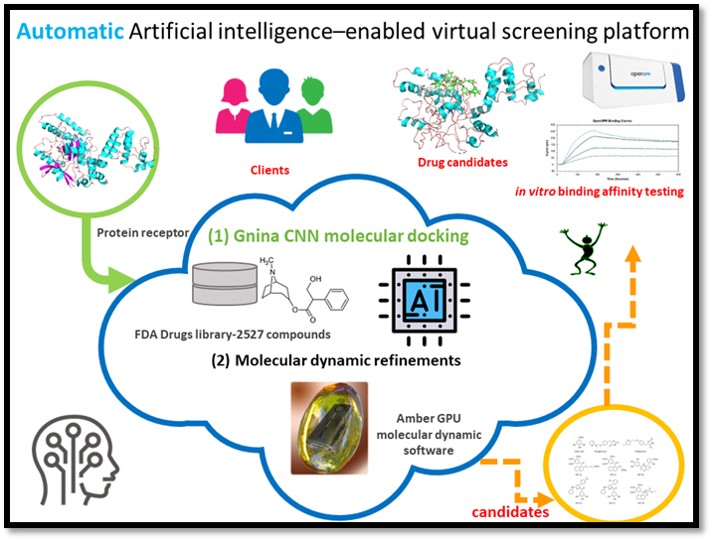
Our center has purchased a database of physical compounds and information for US FDA-approved small molecule drugs (2527 compounds). This is complemented by the high-precision convolutional neural network architecture GNINA molecular docking software (with R² values improved to above 0.7 when compared with experimental IC₅₀ values) and AMBER molecular dynamics software for calculating binding free energy between drug molecules and receptor proteins to better identify potentially successful small molecules (as shown in the AI Automated Drug Screening Platform Strategy Diagram). Simultaneously, this platform provides academia and industry with a rapid and accurate virtual screening and activity experimental testing platform for small molecule drugs.
Establishment of Qualitative and Quantitative Systems for Long-acting Protein Drugs
Service Platform Director: Professor Chih-Hung Chuang
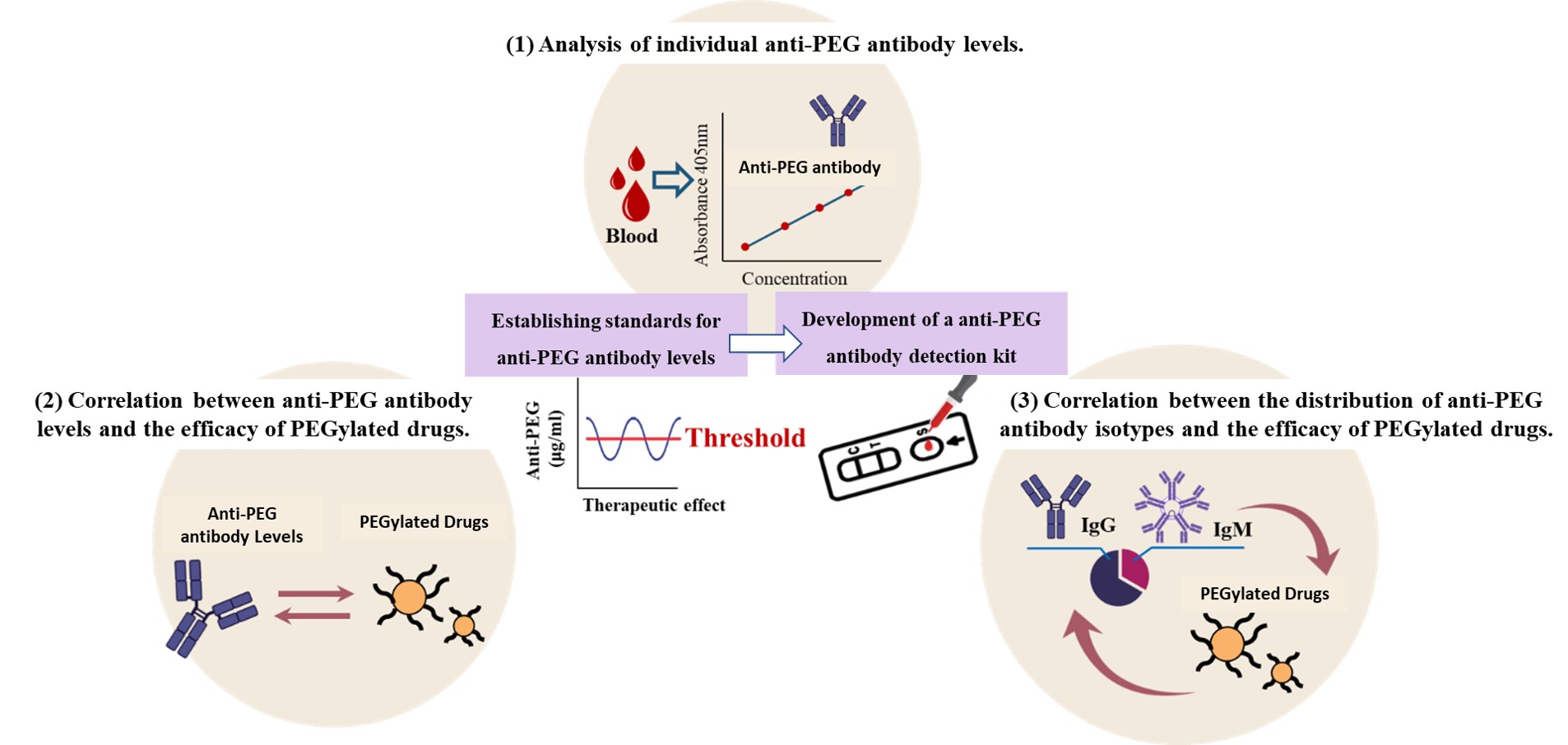
We aim to establish threshold levels for anti-PEG antibodies and their impact on PEGylated drugs to standardize diagnostic assays. By evaluating the effects of various anti-PEG antibody isotypes, we are developing a diversified suite of detection kits to precisely assess drug efficacy and optimize delivery formulations for patients. Furthermore, by providing preclinical functional assessments, we enhance the industrial utility of therapeutic products, foster academia-industry collaboration, and add significant value to biomedical technologies.